

Self-service business intelligence has been promised to the insurance industry for years. The pitch is always compelling. Faster access to data. Fewer reporting bottlenecks. Empowered business users making better decisions without waiting for IT.
Yet the lived experience inside many insurers tells a different story. Dashboards multiply. Metrics drift. Confidence in the numbers quietly declines. Business users either feel overwhelmed by complexity or disappointed that “self-service” still involves queues and workarounds.
So, can insurance really do self-service BI?
Based on practical experience across insurers of different sizes and maturities, the answer is yes, but only when it is approached with realism, discipline and a clear operating model. This article explores why self-service BI so often fails in insurance, what makes it work when it succeeds, and the technical and organisational foundations that matter most.
Why insurance finds self-service BI so difficult
Insurance is one of the hardest environments in which to deliver self-service analytics. The difficulty is not down to a lack of tools or ambition. It is structural.
Key challenges include:
- Complex data models
-
- Policies, endorsements, claims, recoveries, reserves and payments are all interrelated.
- Time plays a critical role, with reporting often dependent on inception date, accounting period, notification date and settlement date.
- Policies, endorsements, claims, recoveries, reserves and payments are all interrelated.
2. Multiple valid versions of the truth
-
-
- Metrics such as loss ratio, premium or exposure can legitimately vary by context.
- Finance, actuarial and underwriting teams may each use different definitions for valid reasons.
- Metrics such as loss ratio, premium or exposure can legitimately vary by context.
-
3. Legacy systems
-
- Core policy and claims platforms are often old, fragmented and poorly documented.
- Data extraction and reconciliation remain significant efforts.
- Core policy and claims platforms are often old, fragmented and poorly documented.
4. Regulatory and governance pressure
-
- Data accuracy is non-negotiable.
- Auditability and explainability matter as much as speed.
- Data accuracy is non-negotiable.
In this environment, simply giving users access to a BI tool and a raw dataset is rarely successful. Without structure, self-service quickly becomes self-inflicted pain.
What self-service BI actually means in insurance
One of the most damaging misconceptions is that self-service BI means removing all controls and letting everyone analyse data however they like. In insurance, that approach almost always leads to confusion and mistrust.
A more realistic definition of self-service BI includes:
- Business users can answer common questions without raising tickets.
- Users can explore data confidently within agreed definitions.
- Teams can create new views and reports without rewriting core logic.
- IT and data teams retain ownership of data quality, structure and governance.
In other words, self-service is about guided freedom, not unrestricted access.
This implies a tiered model of users, each with different capabilities and responsibilities.
Typical roles include:
- Consumers
- View dashboards and reports.
- Filter, drill down and export results.
- View dashboards and reports.
- Explorers
- Build their own reports using certified datasets.
- Combine approved metrics and dimensions.
- Build their own reports using certified datasets.
- Power users
- Extend semantic models.
- Create new metrics with governance oversight.
- Extend semantic models.
- Data and BI teams
- Own data pipelines, models, performance and security.
- Enable, rather than replace, business analysis.
- Own data pipelines, models, performance and security.
Insurers that align expectations around these roles are far more likely to see value from self-service BI.
Why self-service BI works when done properly
When implemented with the right foundations, self-service BI delivers real and measurable benefits in insurance organisations.
Common benefits include:
- Faster decision-making
- Underwriters can monitor portfolio performance without waiting for month-end packs.
- Claims managers can identify trends and exceptions early.
- Underwriters can monitor portfolio performance without waiting for month-end packs.
- Reduced reporting backlog
- BI teams spend less time producing variations of the same report.
- More time is available for data quality, optimisation and advanced analytics.
- BI teams spend less time producing variations of the same report.
- Improved data literacy
- Users better understand how metrics are built and what drives them.
- Conversations shift from arguing about numbers to discussing actions.
- Users better understand how metrics are built and what drives them.
- Greater organisational alignment
- Shared definitions promote consistency across functions.
- Performance discussions become more constructive.
- Shared definitions promote consistency across functions.
However, these outcomes only emerge when self-service is built on strong technical and governance foundations.
The critical role of semantic layers and business metrics
If there is one non-negotiable component of successful self-service BI in insurance, it is a robust semantic layer.
The semantic layer acts as the bridge between raw data and business understanding. It is where complexity is managed centrally rather than pushed onto end users.
A strong semantic layer should:
- Define core business entities such as policy, claim, risk and customer.
- Centralise logic for key metrics, including:
- Written, earned and unearned premium
- Incurred claims and reserves
- Loss and combined ratios
- Exposure and policy counts
- Written, earned and unearned premium
- Handle time intelligence consistently.
- Abstract technical joins and transformations.
Without this layer, self-service tools encourage users to recreate logic repeatedly, often incorrectly. Over time, confidence in the data erodes.
Ownership of the semantic layer is also crucial. It should not sit exclusively with IT, nor be left entirely to business users. Instead:
- Finance and actuarial teams should agree on definitions.
- BI teams should implement and optimise them.
- Changes should be transparent and communicated clearly.
Self-service BI does not eliminate the need for these conversations. It forces them to happen.
Preventing metric sprawl before it starts
Metric sprawl is one of the most common and damaging outcomes of poorly governed self-service BI.
It typically looks like this:
- Multiple versions of “loss ratio” appear across reports.
- Teams add local calculations to work around perceived gaps.
- Dashboards conflict, and meetings focus on reconciliation rather than insight.
Preventing metric sprawl requires intent and discipline.
Effective approaches include:
- Clear certification
- Approved metrics should be clearly marked and promoted.
- Users should know which measures are trusted.
- Approved metrics should be clearly marked and promoted.
- Ease of use
- Certified metrics must be easier to use than creating new ones.
- Poor usability encourages workarounds.
- Certified metrics must be easier to use than creating new ones.
- Lightweight governance
- New metrics should be reviewed quickly, not blocked by bureaucracy.
- The aim is alignment, not control for its own sake.
- New metrics should be reviewed quickly, not blocked by bureaucracy.
- Education
- Users should understand why central definitions matter.
- Users should understand why central definitions matter.
The goal is not to stop innovation, but to ensure that innovation builds on shared foundations.
Role-based access is essential, not optional
Insurance data is inherently sensitive. Customer information, claims details and financial results all require careful control.
Role-based access supports both security and usability.
Key principles include:
- Users only see data relevant to their role.
- Sensitive fields are protected by default.
- Access is aligned with organisational responsibilities.
From a technical perspective, this often involves:
- Row-level security based on business attributes.
- Integration with identity and access management systems.
- Auditability of access and changes.
From a user perspective, role-based access reduces noise. Dashboards feel more relevant and easier to navigate. Trust increases because users know the data has been curated appropriately.
Self-service BI without strong access control is not self-service. It is a risk.
Training non-technical users is a continuous investment
Even the best-designed BI platform will fail if users are not supported properly.
Training in insurance organisations must address more than which buttons to click. It should cover:
- Basic data concepts, such as measures, dimensions and filters.
- How insurance metrics behave over time.
- Common pitfalls, such as double-counting or incorrect aggregation.
- How to interpret trends and outliers responsibly.
Effective training approaches include:
- Short, role-specific sessions rather than generic courses.
- Use of real business scenarios.
- Ongoing refreshers as models and metrics evolve.
- Clear support channels, such as office hours or internal communities.
Practical and opinionated lessons from the field
Experience across multiple insurers reveals a consistent set of lessons.
- Self-service BI is an operating model, not a tool
- Technology enables it, but behaviour determines success.
- Executive sponsorship matters
- Without visible support, governance quickly erodes.
- Start with high-value domains
- Claims operations, underwriting performance and finance reporting are common starting points.
- Accept imperfection
- Waiting for perfect data delays value.
- Iteration with feedback works better.
- Waiting for perfect data delays value.
- Know the limits
- Not every question can be answered by dashboards.
- Deep analysis still has a place.
- Not every question can be answered by dashboards.
Perhaps the most important lesson is honesty. Self-service BI is not about eliminating IT or central teams. It is about changing how they add value.
Where technology fits, and where it does not
Technology cannot fix poor definitions, weak governance or lack of training. However, the right platform can make good practices far easier to sustain.
Insurers benefit from technology that:
- Consolidates data from multiple legacy systems.
- Enforces governance without blocking agility.
- Supports both operational and analytical use cases.
- Integrates with existing BI tools rather than replacing them.
- Automates pipelines, quality checks and reporting.
Conclusion: can insurance really do self-service BI?
Yes, insurance can do self-service BI. Many organisations already are.
But success depends on abandoning simplistic narratives and embracing the reality of insurance data. Self-service BI is not about removing structure. It is about designing the right structure and making it usable.
The insurers that succeed are those that:
- Invest in semantic layers and shared metrics.
- Take governance seriously without becoming bureaucratic.
- Respect the need for role-based access and security.
- Commit to ongoing training and support.
- Treat self-service BI as a journey, not a destination.
When these conditions are met, self-service BI stops being a source of frustration and starts becoming what it was always meant to be: a practical way to turn complex insurance data into better decisions.
A note on Kainovation’s Insurepulse
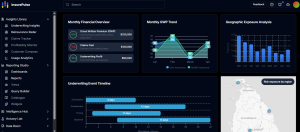
InsurePulse is built for insurers dealing with these exact challenges. It brings together data from multiple legacy systems into a single, governed operational data store, providing a trusted source of truth. With role-based access, automated pipelines and reporting, and support for self-service analytics through tools such as Power BI and Tableau, Pulse helps insurers reduce manual effort while enabling controlled, practical self-service BI that actually works.
We are Kainovation Technologies, leading the way in AI, ML, and Data Analytics. Our innovative solutions transform industries and enhance business operations. Contact us for all your AI needs.